
Keynote SpeakerErica Dhawan

Erica Dhawan is a keynote speaker represented by Rave Speakers, known for Wall Street Journal Bestselling Author, Thinkers50 Honoree, Researcher on How Modern Teams Build Trust and Get Work Done. She delivers keynotes on Bestselling Authors, Collaboration, Communication, Culture, Innovation, Leadership for corporate events, conferences, and association meetings. Erica Dhawan's speaking fee is Please Inquire. To book Erica Dhawan, contact Rave Speakers at (310) 614-8653 or visit ravespeakers.com.

Wall Street Journal Bestselling Author, Thinkers50 Honoree, Researcher on How Modern Teams Build Trust and Get Work Done

Keynote SpeakerErica Dhawan

Wall Street Journal Bestselling Author, Thinkers50 Honoree, Researcher on How Modern Teams Build Trust and Get Work Done

Wall Street Journal bestselling author of Digital Body Language and Use Your Brain
Thinkers50 honoree, recognized among the thinkers shaping the future of management
Ranked first on the industry's leading list of women keynote speakers
Speaking Fee: Please Inquire
https://www.youtube.com/watch?v=CTm-yjnNkrE

Erica Dhawan is a researcher and keynote speaker who shows organizations how to close the gaps between their teams and make decisions worth defending.

Most companies cannot say what they lose to their own internal friction. The duplicated project nobody caught. The decision made three separate times because it never quite stuck. The message that landed wrong and cost a week. Erica Dhawan has spent her career putting language and evidence to exactly that kind of waste, and giving organizations a way out of it.

She is a keynote speaker and researcher on how modern teams actually function: across departments, across time zones, and increasingly across screens rather than tables. Her three books trace the arc. Get Big Things Done introduced Connectional Intelligence, her framework for reaching the expertise buried inside an organization’s relationships. Digital Body Language, a Wall Street Journal bestseller, examined what happens to trust when the cues people rely on move into text. Use Your Brain, her most recent, argues that independent reasoning is becoming a competitive asset precisely as it becomes optional.

Dhawan holds degrees from Harvard, MIT, and Wharton. Thinkers50 has recognized her among the thinkers most likely to shape the future of management, and she ranks at the top of industry lists of women keynote speakers. Her writing appears in Harvard Business Review, the New York Times, and the Wall Street Journal.

Audiences for that work have included the World Economic Forum at Davos, the United States Army, Google, Disney, Bank of America, McDonald’s, Lockheed Martin, and the Miami Heat. What meeting planners report back is the balance she strikes: grounded in research but delivered through stories, and specific enough that teams leave with practices they can run the following Monday rather than concepts they will have forgotten by the flight home.

For organizations under pressure to move faster without hollowing out the judgment of the people doing the work, Erica Dhawan is a keynote speaker who makes the problem visible and the fix concrete.

The RAVE Speakers Advantage

Why you should book your speaker with us

Sample Videos

Erica Dhawan Keynote Reel

Collaboration and Innovation

Keynote Topics

Ask a room of executives how much duplicated effort their company is funding at this moment and nobody has a number. That is the problem. Redundant projects, stalled handoffs, and decisions that get relitigated across four separate meetings never show up on a budget line, which is exactly why they persist for years. Most leaders assume better software will eventually solve it. It has not. Organizations have never had more ways to share information and have rarely felt slower.

Erica Dhawan’s answer is that the highest-value knowledge inside any enterprise was never entered into a system. It sits with the person who ran a version of this initiative before, the manager who knows which regulator actually returns calls, the account lead whose relationship makes a difficult renewal possible. Reaching that material is a learnable skill, and Dhawan named it Connectional Intelligence in her book Get Big Things Done. It has since shaped leadership programs across financial services, technology, and the military.

The keynote stays practical about how that works. Dhawan maps the specific points where handoffs break inside an organization, shows leaders how to spot the quiet connectors whose networks already reach across divisions, and gives them a method for putting a question in front of the right expert quickly instead of escalating it up a chain of command and back down again. She is direct that none of this requires new headcount, new platforms, or another standing meeting.

Attendees leave with a way to locate expertise their systems cannot index, a diagnostic for where their own collaboration is currently failing, and habits that keep distributed teams accountable to one another without constant supervision. It is a strong opening session for sales kickoffs, leadership summits, and association general meetings, especially when the room spans functions that rarely sit together and needs common ground before the agenda goes deeper.

There is a failure mode spreading through capable organizations right now, and it is easy to miss because it looks like efficiency. Work gets generated, reviewed quickly, and shipped. Nobody argued. Nobody was slowed down. Then a client asks how a recommendation was reached, and the room discovers that no single person can reconstruct the reasoning behind it. Reviewing output is not the same as thinking, and the distance between the two is widening at most companies.

Erica Dhawan’s position is that judgment is becoming the scarcest asset on a payroll. She frames Critical Thinking Intelligence as this decade’s equivalent of what Emotional Intelligence became in the 1990s: a distinguishing capability rather than a soft skill. The research behind her book Use Your Brain informs a talk that is emphatically pro-technology. Her concern is not adoption speed. It is the quiet erosion of the reasoning muscle that makes a workforce worth more than the tools it operates.

What makes the session usable is that Dhawan hands teams mechanics rather than principles. She teaches the Think Sandwich, a sequence requiring a person to define the problem before any tool engages and to defend the result afterward. She teaches the Friction Meeting, where dissent is assigned rather than hoped for, so agreement has to be earned. And she teaches the Decision Filter, a way of sorting which work belongs to a machine, which belongs to a machine under supervision, and which never leaves human hands. Each arrives with examples from organizations that learned the lesson expensively.

Audiences leave able to recognize when their teams have stopped questioning and started rubber-stamping, to interrogate generated work instead of accepting it, and to make consequential calls they can still justify months later. The talk is interactive and suits leadership teams, technology functions, and any organization whose tool rollout outpaced its agreement on how those tools should be used.

Something strange has happened to professional communication. The writing has gotten better and the trust has gotten worse. When a note arrives structured, courteous, and free of errors, it no longer tells you the sender was invested. It might mean they were. It might mean they spent eleven seconds on it. Recipients have lost the ability to tell the difference, and that uncertainty is quietly damaging client relationships and internal working relationships alike.

For years, teams read one another through imperfection. Delay, brevity, a message sent late at night, an unusually detailed reply. Those were unreliable indicators, but they were expensive to fake, which is precisely what made them informative. That economics has collapsed. Erica Dhawan, whose Wall Street Journal bestseller Digital Body Language decoded how presence and attention translate onto a screen, has spent the years since studying what replaces them.

This keynote is her answer. Dhawan identifies which cues still carry real information, which ones people are wrongly continuing to trust, and how credibility gets rebuilt with a customer, a peer, or a direct report who cannot see you. She is specific about the norms teams adopt by accident and pay for later, and she treats communication standards as an operational decision rather than a question of etiquette.

Groups leave having drafted working agreements for their own organization covering what may be automated, what may be assisted, and what has to originate with a person. They also leave with sharper habits across email, chat, phone, video, and live meetings, plus a clearer read on where their team is currently losing trust without realizing it. The session fits revenue and client-facing teams, hybrid and distributed workforces, and any company where the cost of miscommunication has never been quantified.

Erica Dhawan review photo 1

Erica's presentation was an absolute hit.

- Erik Spoelstra, Head Coach, Miami Heat

Erica Dhawan review photo 2

OUTSTANDING. Every story she shared resonated. We can't wait to bring Erica back. She nailed it. Exactly what we wanted.

- Leonard McCullough, CEO, Young Presidents Organization

Erica Dhawan review photo 3

Erica delivered an outstanding keynote. Her message about digital body language could not be more relevant and timely than it is today.

- Bridget Dunn, Meeting Planner, Association for Talent Development

Erica Dhawan review photo 4

Terrific. Our leaders were very engaged and had immediate practical takeaways. Erica made a big impact.

- Mike Fucci, Chairman Emeritus, Deloitte

Erica Dhawan review photo 5

On our initial conference call, not only did she provide us with the information we needed, she provided us with insights and ideas to benefit our credit union executives in a way we didn't even think of. Her keynote presentation on Connectional Intelligence was so thought provoking it received a 5-star rating.

- Deanne Figueras, Credit Union League

Books by Erica Dhawan

Use Your Brain: How to Think Deeper in a World on Autopilot book cover

Use Your Brain: How to Think Deeper in a World on Autopilot

ISBN: 9781250450548

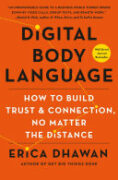
Digital Body Language: How to Build Trust and Connection, No Matter the Distance book cover

Digital Body Language: How to Build Trust and Connection, No Matter the Distance

ISBN: 9781250246523

Get Big Things Done: The Power of Connectional Intelligence book cover

Get Big Things Done: The Power of Connectional Intelligence

ISBN: 9781137279781

Frequently Asked Questions

Her keynotes cover three areas: how organizations recover the value that gets lost between departments, how teams hold onto trust when most of their communication happens through a screen, and how leaders protect independent judgment as more work becomes automated. Each session is shaped around the client's industry and the specific friction their teams are living with.
Contact Rave Speakers at (310) 614-8653 or send a request through ravespeakers.com. We will confirm her availability for your dates, walk you through fees and format options, and handle contracting, travel, and day-of coordination so your team can concentrate on the rest of the program.
Yes. She works with organizers before the event to understand the business context, the makeup of the room, and what the audience should be doing differently afterward. Examples, terminology, and case studies get adjusted accordingly. Tell us what your group is wrestling with and we will scope the customization during the booking conversation.
Yes. She delivers live virtual sessions alongside in-person keynotes, and virtual dates carry a different fee than live ones. Interactive elements are rebuilt for the remote format rather than dropped, which matters given that communicating well at a distance is one of her core subjects.
Digital Body Language is the framework behind her Wall Street Journal bestseller. It names a problem most teams feel but cannot articulate: once conversation moves to email, chat, and video, the signals people used to read in a room get replaced by response times, phrasing, punctuation, and camera presence. Planners request it when their organization has gone hybrid or distributed and trust has quietly degraded.
She works well with leadership teams, revenue and client-facing organizations, and association audiences spanning multiple functions. Past clients include the World Economic Forum, the United States Army, Google, Disney, Bank of America, and Lockheed Martin. She is often booked as an opening keynote when a program needs shared language established before it moves into breakouts.
Eight to twelve weeks is typical, though her calendar during peak conference season fills earlier than that. If you have a date in mind, call Rave Speakers at (310) 614-8653 to check availability before you build the rest of your agenda around it.

Erica Dhawan Sample Videos

Erica Dhawan Keynote Speeches

Ask a room of executives how much duplicated effort their company is funding at this moment and nobody has a number. That is the problem. Redundant projects, stalled handoffs, and decisions that get relitigated across four separate meetings never show up on a budget line, which is exactly why they persist for years. Most leaders assume better software will eventually solve it. It has not. Organizations have never had more ways to share information and have rarely felt slower.

Erica Dhawan’s answer is that the highest-value knowledge inside any enterprise was never entered into a system. It sits with the person who ran a version of this initiative before, the manager who knows which regulator actually returns calls, the account lead whose relationship makes a difficult renewal possible. Reaching that material is a learnable skill, and Dhawan named it Connectional Intelligence in her book Get Big Things Done. It has since shaped leadership programs across financial services, technology, and the military.

The keynote stays practical about how that works. Dhawan maps the specific points where handoffs break inside an organization, shows leaders how to spot the quiet connectors whose networks already reach across divisions, and gives them a method for putting a question in front of the right expert quickly instead of escalating it up a chain of command and back down again. She is direct that none of this requires new headcount, new platforms, or another standing meeting.

Attendees leave with a way to locate expertise their systems cannot index, a diagnostic for where their own collaboration is currently failing, and habits that keep distributed teams accountable to one another without constant supervision. It is a strong opening session for sales kickoffs, leadership summits, and association general meetings, especially when the room spans functions that rarely sit together and needs common ground before the agenda goes deeper.

There is a failure mode spreading through capable organizations right now, and it is easy to miss because it looks like efficiency. Work gets generated, reviewed quickly, and shipped. Nobody argued. Nobody was slowed down. Then a client asks how a recommendation was reached, and the room discovers that no single person can reconstruct the reasoning behind it. Reviewing output is not the same as thinking, and the distance between the two is widening at most companies.

Erica Dhawan’s position is that judgment is becoming the scarcest asset on a payroll. She frames Critical Thinking Intelligence as this decade’s equivalent of what Emotional Intelligence became in the 1990s: a distinguishing capability rather than a soft skill. The research behind her book Use Your Brain informs a talk that is emphatically pro-technology. Her concern is not adoption speed. It is the quiet erosion of the reasoning muscle that makes a workforce worth more than the tools it operates.

What makes the session usable is that Dhawan hands teams mechanics rather than principles. She teaches the Think Sandwich, a sequence requiring a person to define the problem before any tool engages and to defend the result afterward. She teaches the Friction Meeting, where dissent is assigned rather than hoped for, so agreement has to be earned. And she teaches the Decision Filter, a way of sorting which work belongs to a machine, which belongs to a machine under supervision, and which never leaves human hands. Each arrives with examples from organizations that learned the lesson expensively.

Audiences leave able to recognize when their teams have stopped questioning and started rubber-stamping, to interrogate generated work instead of accepting it, and to make consequential calls they can still justify months later. The talk is interactive and suits leadership teams, technology functions, and any organization whose tool rollout outpaced its agreement on how those tools should be used.

Something strange has happened to professional communication. The writing has gotten better and the trust has gotten worse. When a note arrives structured, courteous, and free of errors, it no longer tells you the sender was invested. It might mean they were. It might mean they spent eleven seconds on it. Recipients have lost the ability to tell the difference, and that uncertainty is quietly damaging client relationships and internal working relationships alike.

For years, teams read one another through imperfection. Delay, brevity, a message sent late at night, an unusually detailed reply. Those were unreliable indicators, but they were expensive to fake, which is precisely what made them informative. That economics has collapsed. Erica Dhawan, whose Wall Street Journal bestseller Digital Body Language decoded how presence and attention translate onto a screen, has spent the years since studying what replaces them.

This keynote is her answer. Dhawan identifies which cues still carry real information, which ones people are wrongly continuing to trust, and how credibility gets rebuilt with a customer, a peer, or a direct report who cannot see you. She is specific about the norms teams adopt by accident and pay for later, and she treats communication standards as an operational decision rather than a question of etiquette.

Groups leave having drafted working agreements for their own organization covering what may be automated, what may be assisted, and what has to originate with a person. They also leave with sharper habits across email, chat, phone, video, and live meetings, plus a clearer read on where their team is currently losing trust without realizing it. The session fits revenue and client-facing teams, hybrid and distributed workforces, and any company where the cost of miscommunication has never been quantified.

Check Erica Dhawan's Availability

Base your confidence on the company we keep

Where our speakers are speaking

Inky Johnson is keynoting MDRT’s annual event in June.
Leading Age used Cynt Marshall to headline last year and now has Ryan Leak and Jia Jiang booked for their June event.
Ryan Leak just addressed The National Auto Dealers Association at their 2025 annual event.
Magic Johnson will headline RSAC 2025—the World’s largest cybersecurity conference next month.
Scott Galloway addressed PCMA’s Convening Leaders Conference 2025 conference.
The NCA (National Confectioners Association) had their State of the Candy Industry Convention this month with Keynote speakers Jesse Cole and Molly Bloom who delivered inspiring messages on creative thinking and business resilience.
To say Janet Evans inspired me is an understatement. I had the great honor of being in the stadium in 1996 when the torch relay took place and have fond memories of the torch being handed by Janet to Muhammad Ali. Little did I know that amazing woman would come back later in life to inspire me with her version of the event. Thank you for your diligent efforts to bring Janet’s story to us.

Kathy Roche

Director of Meetings, Western & Southern Life

I just wanted to express my appreciation for having the opportunity to have Alex Honnold speak to my senior leadership group this morning. Alex was amazing: funny, articulate, open, humble, and very engaging. My group loved him and his presentation. Please let Alex know how much we appreciated him and his accomplishments, most notably his charitable foundation.

Robert Darby

CEO, Berkshire Hathaway Homestate

Our team has been working with Rave Speakers as a trusted resource for all of our keynote presenters at all of our events. They come in on-budget and are always there to support us. Rave Speakers is excellent to work with and an awesome partner.

Heidi Pascale

Senior Director of Experiental Marketing and Training, ASSA ABLOY Door Security Solutions

Thank you for all you did with booking Magic Johnson and being on site with him. It was so refreshing meeting you in person and having the service you provided. That was an invaluable experience for me and my team and I cannot thank you enough. Magic was amazing – there could not have been a better fit for our conference. Honestly, Mr. Johnson and Mel Robbins complemented each other better than I could have ever dreamt. The two of them made our conference.

Randie Vasso

Project Analyst, Heartland Payment Systems

© 2025 Rave Speakers. All rights reserved.

How Rave Speakers Works

See how we can deliver a standing ovation for your next event

Similar Speakers

The RAVE Speakers Advantage

At no additional cost to you,   we are often onsite at your meeting to ensure the successful delivery of your presenters.

Check Speaker Availability

Connect with us

Call Anytime: (310) 614-8653

Schedule a Pre-Booking Call

Pre-booking calls help us determine if a speaker of interest is a perfect fit with a personal phone call between the potential speaker and your executive team.

Complete the form below and we will reach out to you to schedule your pre-booking call!

Call Anytime: (310) 614-8653

uber-eats-50-gift

Claim Your $50 Uber Eats Gift Card

Schedule a short brainstorming session and receive a $50 Uber Eats gift card!

Claim your $50 gift card
Schedule a call with us and lunch is on us!