
Keynote SpeakerBethany Hamilton

Bethany Hamilton is a keynote speaker represented by Rave Speakers, known for Professional Surfer, New York Times Best-Selling Author of Soul Surfer, Subject of the Major Motion Picture Soul Surfer & World-Renowned Keynote Speaker. She delivers keynotes on Bestselling Authors, Inspirational, Motivational, Overcoming Adversity, Resilience, Sports for corporate events, conferences, and association meetings. Bethany Hamilton's speaking fee is Please Inquire. To book Bethany Hamilton, contact Rave Speakers at (310) 614-8653 or visit ravespeakers.com.

Professional Surfer, New York Times Best-Selling Author of Soul Surfer, Subject of the Major Motion Picture Soul Surfer & World-Renowned Keynote Speaker

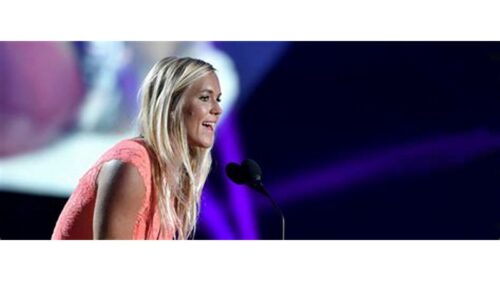
Bethany Hamilton headshot

Keynote SpeakerBethany Hamilton

Professional Surfer, New York Times Best-Selling Author of Soul Surfer, Subject of the Major Motion Picture Soul Surfer & World-Renowned Keynote Speaker

Returned to professional surfing 26 days after losing her left arm to a 14-foot tiger shark at age 13; won her first national title two years later.
New York Times best-selling author of Soul Surfer (made into the 2011 major-motion-picture feature) and 8 other books; subject of the 2018 documentary Bethany Hamilton: Unstoppable.
Founder of the Friends of Bethany Foundation; ESPY Award winner; keynote speaker for Liberty University, Talks at Google, and the 2025 March for Life on the National Mall.
Speaking Fee: Please Inquire
https://www.youtube.com/watch?v=ACmgPOFwK-g
Travel Buyout: Negotiated separately; flat travel fee or itemized billing

Bethany Hamilton is a professional surfer, New York Times best-selling author of Soul Surfer, subject of the 2011 feature film Soul Surfer and the 2018 documentary Unstoppable, and one of the most enduring voices on resilience, faith, and the practical mechanics of refusing to quit.

Bethany Hamilton is one of the most recognizable comeback stories in American sports – and one of the most enduring voices on resilience, faith, and the practical mechanics of refusing to quit. On October 31, 2003, the 13-year-old surfer was attacked by a 14-foot tiger shark off Tunnels Beach on Kauai’s north shore. The attack severed her left arm at the shoulder and cost her more than 60 percent of her blood. Twenty-six days later, she was back in the water. Two years after that, she had won her first national surfing title.

The story behind the story is what audiences come for. Bethany returned to professional competition with a custom board, a re-engineered paddling technique, and the conviction that her future was not going to be defined by a Halloween morning that was supposed to end her career. She has since competed on the World Surf League tour, won professional events, and earned a permanent place on the short list of athletes whose comeback became a category of its own. Along the way she has also become a New York Times bestselling author of nine books, the subject of the 2011 feature film Soul Surfer (in which she performed her own one-armed surfing stunts) and the 2018 documentary Bethany Hamilton: Unstoppable, and a national-platform speaker who has delivered keynotes at Liberty University, Talks at Google, and the 2025 March for Life on the National Mall.

Bethany attributes her strength to her Christian faith and to the practical habits she has refined over two decades of training, parenting, and public life. Through the Friends of Bethany Foundation she has built four programs – Beautifully Flawed, Shine Forth, Anchored in Love, and The Forge – that work directly with amputees, young women, and men navigating physical and emotional recovery. Her ADAPT framework (Appreciative, Directed, Associate, Perseverance, Teachable) is the structural backbone of her keynote work, and her newest book Surfing Past Fear translates the mindset into a teaching tool for youth audiences and adults alike.

On stage, Bethany blends the directness of an athlete who has competed at the highest level with the warmth of a wife and mother of four, and the spiritual grounding that has anchored her since the morning her life changed. She delivers for corporate audiences, faith-based events, leadership conferences, women’s groups, athlete programs, and association annual meetings – and consistently produces the rare keynote outcome that audiences cite for years afterward: a measurable shift in how attendees relate to obstacle, fear, and what they thought their next chapter would look like.

The RAVE Speakers Advantage

Why you should book your speaker with us

Sample Videos

Soul Surfer | Bethany Hamilton | Talks at Google

Bethany Hamilton at Liberty University Convocation

Surfer Bethany Hamilton: How to Overcome Obstacles

How Bethany Hamilton Overcame the Impossible With Faith and Strength

Keynote Topics

Most people, when they meet a setback severe enough to redirect their lives, never fully come back. They survive the moment, adapt to the new reality, and quietly let their old ambitions go. The exception – the person who not only returns to what they were doing but exceeds what they were doing before – is rare enough that the rest of us study them. Bethany Hamilton is one of those rare cases, and she has spent the last two decades studying her own pattern so she can teach it.

At 13, Bethany lost her left arm to a 14-foot tiger shark while surfing off Kauai. Within 26 days she was back in the water; within two years she had won her first national title; within four years she was competing professionally on the World Surf League tour. The pattern is more reproducible than it looks, and it is built on five specific qualities Bethany now teaches as her ADAPT framework: Appreciative, Directed, Associate, Perseverance, Teachable. Each one corresponds to a specific operating habit that Bethany used to rebuild after the attack, and each one transfers directly to the corporate, athletic, and personal challenges audiences face.

In this signature keynote, Bethany walks audiences through the framework one principle at a time. She covers how appreciation rewires the relationship between someone and their circumstances (and why it is far more practical than it sounds), how to direct attention deliberately toward what can be influenced rather than what cannot, how to associate with the right people in the right moments, how perseverance is engineered rather than summoned, and how the teachable mindset distinguishes leaders who recover from leaders who plateau. She illustrates each principle with stories from her own arc – the conversation with her father in the hospital, the first session back in the water, the months of physical retraining most viewers never see, and the specific decisions she has made as a wife, mother of four, and competing professional athlete to keep the framework working in her current life.

Bethany is direct about the patterns that derail most comebacks: the way self-pity quietly hardens into identity, the way comparison erodes the energy needed to rebuild, the way well-meaning people accidentally limit a recovering person more than the original setback did. She names them, gives audiences a vocabulary for the moves that defeat them, and pairs each with a concrete habit attendees can install starting that week.

Audiences leave able to: name the specific obstacle they have been quietly accommodating, deploy each of the five ADAPT qualities against it, identify the relationships in their life that fuel their comeback versus the ones that drain it, and walk into their next hard week with a working framework rather than a feeling.

Ideal for: leadership cohorts, sales kickoffs, faith-based events, athlete and recovery audiences, women’s leadership programs, association annual meetings, and any organization navigating a season that will require resilience as a core operating skill.

Most people are stopped by something far smaller than what they assume will stop them. The career-ending crisis they fear rarely arrives; the slow erosion of energy, focus, and conviction over a year of small obstacles is what actually moves the trajectory. The data on professional plateaus consistently points to the same conclusion: it is not the big thing that breaks people, it is the accumulation of unaddressed small things that quietly takes the edge off their best work.

Bethany Hamilton built this keynote out of the practices she returns to – daily, weekly, and during the seasons that demand the most of her – to keep an unstoppable mindset functional under pressure. After 20+ years of returning to a sport that requires hours of preparation for moments of execution, raising four children with her husband, running the Friends of Bethany Foundation, building her speaking platform, and navigating the public spotlight that comes with a major-motion-picture biography, she has refined a working set of keys that other high-performance professionals can adopt and apply.

The keynote covers five practical keys: the morning operating practice that anchors her energy regardless of what the day demands, the way she frames adversity as data rather than identity, the discipline of focused action when the situation is unclear, the relationship maintenance that protects her energy without isolating her, and the spiritual grounding that has been her single most reliable source of resilience since she was a child. Each key is built around a specific, repeatable move – not a feeling – and each is illustrated with real examples from her own life: the night before a major competition, the season after losing her sponsor, the days following the public statements that cost her her longest contract.

Bethany unpacks the patterns most professionals fall into without seeing them: the energy debt that compounds across an under-recovered week, the way small avoidance habits become large career outcomes, the comparison cycle that drains people while looking like ambition, and the specific moves that turn each of these around. She names what she has watched destroy other people’s comebacks and the simple practices that quietly defeat them.

Audiences leave able to: identify which of the five keys they are currently strongest and weakest at, install one practical morning practice that anchors energy under pressure, distinguish productive ambition from comparison-driven anxiety, articulate the spiritual or values-based foundation that grounds their work, and walk into the next demanding season with a working playbook rather than a hope.

Ideal for: executive leadership cohorts, sales and customer-success kickoffs, faith-based audiences, women’s leadership programs, athlete and high-performance audiences, and conferences focused on resilience, energy management, or mental performance under pressure.

On Halloween morning 2003, a 14-foot tiger shark attacked a 13-year-old girl surfing with friends off Tunnels Beach on Kauai’s north shore. Bethany Hamilton lost her left arm at the shoulder and over 60 percent of her blood. She was rushed to surgery on the same operating table where her father was scheduled for a knee operation that morning. By the time she got there, the doctors were not certain she would live.

This is the keynote that became a New York Times bestselling autobiography and a major-motion-picture feature film. Soul Surfer tells the story of the attack, the recovery, the return to the water, and the family, faith, and community that made the comeback possible. It is also the story Bethany has told on stages and screens for 22 years – and the version she delivers live is built specifically for audiences who already know the broad outline and want the moments most people never hear about.

Bethany walks audiences through the texture of the story: the conversation with her father at the hospital that reset her trajectory in the first 24 hours, the specific role her older brothers played in keeping her stable across the recovery, the practical rebuilding of her surfing technique that took months and involved more failure than the movie shows, the early competitions where she had to relearn what she could do versus what she remembered being able to do, and the spiritual grounding her family provided that she has carried forward into every chapter since.

The keynote is not a recap. Bethany pulls forward the principles audiences can use – the family dynamics that build resilient kids, the faith practices that anchor under pressure, the recovery framework that worked for her and translates to non-surfing comebacks, and the specific moves she made as a teenager that compounded into the adult life she has now. She is direct about what was hard, what felt impossible at the time, and what she would tell her 13-year-old self if she could go back to the morning before the attack.

Audiences leave able to: see their own setbacks against a more honest comparison than the airbrushed version most stories provide, name the family or community structures that have been quietly carrying them, articulate the faith or values foundation that anchors their decisions under pressure, and walk into their next difficult moment with a more grounded sense of what is actually possible.

Ideal for: faith-based events, family-focused audiences, women’s groups, youth and student programs, association annual meetings, leadership conferences, and any audience that wants to hear the most enduring comeback story of the past two decades told directly by the person who lived it.

Fear is one of the most undertaught topics in modern leadership and personal-development work. Most professional audiences have been told to push through it, ignore it, or reframe it – but the practical mechanics of how to actually move forward when the fear is reasonable, the stakes are real, and the path forward is not yet clear are rarely covered. Bethany Hamilton has lived in those waters longer than almost any speaker on the circuit, and she has built a keynote specifically to teach what she has learned.

Drawn from her newest book Surfing Past Fear, this talk addresses the specific psychology of resuming high-stakes activity after a setback – whether that activity is professional, athletic, relational, or creative. Bethany walks audiences through the actual moves she made to return to the ocean after the shark attack, the moves she has made before every major competition since, and the moves she now teaches the amputees and youth she works with through the Friends of Bethany Foundation. She also covers the way fear shows up differently as a parent, a leader, and an aging athlete – and the specific practices she has refined for each.

The keynote covers four practical mechanics: how to distinguish productive fear (which is information) from paralyzing fear (which is noise), the specific decision-making framework for moments when the data is incomplete and the stakes are high, the way to maintain identity and conviction during the long stretch where the new chapter is not yet legible to the people around you, and the relationship and spiritual practices that quietly determine whether someone moves through fear as a season or settles into it as an identity.

Bethany illustrates each mechanic with stories: her first paddle out after the attack, the season she spent rebuilding her competitive ranking, the conversations with her husband during the years she was deciding whether to keep competing, and the specific moments with each of her four children that have taught her how fear shows up in a parenting context. She names the patterns she has watched derail other recoveries and the simple practices that quietly defeat them.

Audiences leave able to: identify the specific fear they are currently letting govern decisions in their work or personal life, deploy a four-question framework that distinguishes informational fear from paralyzing fear, articulate what they would do this quarter if their fear about the outcome were 30 percent smaller, and walk into the next high-stakes conversation with a vocabulary their team or family will recognize as honest rather than performative.

Ideal for: leadership cohorts, faith-based audiences, athlete and recovery programs, women’s leadership events, parenting and family conferences, youth and student audiences, and any organization where the next chapter requires the team to do something they have never done before.

Bethany Hamilton review photo 1

Bethany Hamilton's convocation address held the entire student body's attention from her first sentence to her last. Her ability to translate a deeply personal story into principles every student could apply to their own life made her one of the most memorable speakers on our calendar. We received feedback from students, faculty, and staff for weeks afterward.

- Liberty University Convocation

Bethany Hamilton review photo 2

Bethany Hamilton's Talks at Google session was warm, direct, and refreshingly practical. She walked our audience through her arc with honesty most speakers cannot deliver, and she paired the storytelling with frameworks our team continued to reference in conversations long after she left the building.

- Talks at Google

Books by Bethany Hamilton

Soul Surfer book cover

Soul Surfer: A True Story of Faith, Family, and Fighting to Get Back on the Board

ISBN: 9781416503460

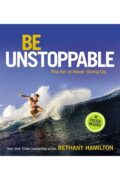
Be Unstoppable book cover

Be Unstoppable: The Art of Never Giving Up

ISBN: 9780310767084

Frequently Asked Questions

Bethany speaks on resilience, overcoming adversity, faith, family, never giving up, and the practical mindset behind the most enduring comeback story in American sports. Her most-booked keynotes are Developing a Mindset of Overcoming, 5 Keys to Living an Unstoppable Life, Soul Surfer, and Surfing Past Fear.
To book Bethany Hamilton for a corporate keynote, faith-based event, leadership conference, or association annual meeting, contact Rave Speakers at (310) 614-8653 or visit ravespeakers.com. Her team customizes every engagement and works with planners on a pre-event call to align her stories and frameworks to the audience and event objectives.
Yes. Bethany delivers virtual keynotes, fireside chats, and webinars with the same depth and presence she brings to the stage. She is comfortable on camera (decades of media experience including the Today show, Oprah, and Talks at Google) and her style translates naturally to remote audiences.
Bethany combines unmatched authenticity (she has lived the story she tells, including 22 years of public life since the attack) with practical, repeatable frameworks audiences can apply to their own challenges. Her ADAPT framework, her storytelling pacing, and her ability to translate a deeply personal arc into transferable principles consistently produce keynotes that audiences cite for years.
ADAPT stands for Appreciative, Directed, Associate, Perseverance, and Teachable - the five qualities Bethany has refined into a working framework for resilience and comeback. Each principle corresponds to a specific operating habit, and the framework is the structural backbone of her keynote work.
Yes. The 2011 feature film Soul Surfer is based on her best-selling autobiography of the same name; AnnaSophia Robb played Bethany, and Bethany performed her own one-armed surfing stunts in the film. She is also the subject of the 2018 documentary Bethany Hamilton: Unstoppable, which follows her transition into marriage, motherhood, and continued professional competition.

Bethany Hamilton Sample Videos

Bethany Hamilton Keynote Speeches

Most people, when they meet a setback severe enough to redirect their lives, never fully come back. They survive the moment, adapt to the new reality, and quietly let their old ambitions go. The exception – the person who not only returns to what they were doing but exceeds what they were doing before – is rare enough that the rest of us study them. Bethany Hamilton is one of those rare cases, and she has spent the last two decades studying her own pattern so she can teach it.

At 13, Bethany lost her left arm to a 14-foot tiger shark while surfing off Kauai. Within 26 days she was back in the water; within two years she had won her first national title; within four years she was competing professionally on the World Surf League tour. The pattern is more reproducible than it looks, and it is built on five specific qualities Bethany now teaches as her ADAPT framework: Appreciative, Directed, Associate, Perseverance, Teachable. Each one corresponds to a specific operating habit that Bethany used to rebuild after the attack, and each one transfers directly to the corporate, athletic, and personal challenges audiences face.

In this signature keynote, Bethany walks audiences through the framework one principle at a time. She covers how appreciation rewires the relationship between someone and their circumstances (and why it is far more practical than it sounds), how to direct attention deliberately toward what can be influenced rather than what cannot, how to associate with the right people in the right moments, how perseverance is engineered rather than summoned, and how the teachable mindset distinguishes leaders who recover from leaders who plateau. She illustrates each principle with stories from her own arc – the conversation with her father in the hospital, the first session back in the water, the months of physical retraining most viewers never see, and the specific decisions she has made as a wife, mother of four, and competing professional athlete to keep the framework working in her current life.

Bethany is direct about the patterns that derail most comebacks: the way self-pity quietly hardens into identity, the way comparison erodes the energy needed to rebuild, the way well-meaning people accidentally limit a recovering person more than the original setback did. She names them, gives audiences a vocabulary for the moves that defeat them, and pairs each with a concrete habit attendees can install starting that week.

Audiences leave able to: name the specific obstacle they have been quietly accommodating, deploy each of the five ADAPT qualities against it, identify the relationships in their life that fuel their comeback versus the ones that drain it, and walk into their next hard week with a working framework rather than a feeling.

Ideal for: leadership cohorts, sales kickoffs, faith-based events, athlete and recovery audiences, women’s leadership programs, association annual meetings, and any organization navigating a season that will require resilience as a core operating skill.

Most people are stopped by something far smaller than what they assume will stop them. The career-ending crisis they fear rarely arrives; the slow erosion of energy, focus, and conviction over a year of small obstacles is what actually moves the trajectory. The data on professional plateaus consistently points to the same conclusion: it is not the big thing that breaks people, it is the accumulation of unaddressed small things that quietly takes the edge off their best work.

Bethany Hamilton built this keynote out of the practices she returns to – daily, weekly, and during the seasons that demand the most of her – to keep an unstoppable mindset functional under pressure. After 20+ years of returning to a sport that requires hours of preparation for moments of execution, raising four children with her husband, running the Friends of Bethany Foundation, building her speaking platform, and navigating the public spotlight that comes with a major-motion-picture biography, she has refined a working set of keys that other high-performance professionals can adopt and apply.

The keynote covers five practical keys: the morning operating practice that anchors her energy regardless of what the day demands, the way she frames adversity as data rather than identity, the discipline of focused action when the situation is unclear, the relationship maintenance that protects her energy without isolating her, and the spiritual grounding that has been her single most reliable source of resilience since she was a child. Each key is built around a specific, repeatable move – not a feeling – and each is illustrated with real examples from her own life: the night before a major competition, the season after losing her sponsor, the days following the public statements that cost her her longest contract.

Bethany unpacks the patterns most professionals fall into without seeing them: the energy debt that compounds across an under-recovered week, the way small avoidance habits become large career outcomes, the comparison cycle that drains people while looking like ambition, and the specific moves that turn each of these around. She names what she has watched destroy other people’s comebacks and the simple practices that quietly defeat them.

Audiences leave able to: identify which of the five keys they are currently strongest and weakest at, install one practical morning practice that anchors energy under pressure, distinguish productive ambition from comparison-driven anxiety, articulate the spiritual or values-based foundation that grounds their work, and walk into the next demanding season with a working playbook rather than a hope.

Ideal for: executive leadership cohorts, sales and customer-success kickoffs, faith-based audiences, women’s leadership programs, athlete and high-performance audiences, and conferences focused on resilience, energy management, or mental performance under pressure.

On Halloween morning 2003, a 14-foot tiger shark attacked a 13-year-old girl surfing with friends off Tunnels Beach on Kauai’s north shore. Bethany Hamilton lost her left arm at the shoulder and over 60 percent of her blood. She was rushed to surgery on the same operating table where her father was scheduled for a knee operation that morning. By the time she got there, the doctors were not certain she would live.

This is the keynote that became a New York Times bestselling autobiography and a major-motion-picture feature film. Soul Surfer tells the story of the attack, the recovery, the return to the water, and the family, faith, and community that made the comeback possible. It is also the story Bethany has told on stages and screens for 22 years – and the version she delivers live is built specifically for audiences who already know the broad outline and want the moments most people never hear about.

Bethany walks audiences through the texture of the story: the conversation with her father at the hospital that reset her trajectory in the first 24 hours, the specific role her older brothers played in keeping her stable across the recovery, the practical rebuilding of her surfing technique that took months and involved more failure than the movie shows, the early competitions where she had to relearn what she could do versus what she remembered being able to do, and the spiritual grounding her family provided that she has carried forward into every chapter since.

The keynote is not a recap. Bethany pulls forward the principles audiences can use – the family dynamics that build resilient kids, the faith practices that anchor under pressure, the recovery framework that worked for her and translates to non-surfing comebacks, and the specific moves she made as a teenager that compounded into the adult life she has now. She is direct about what was hard, what felt impossible at the time, and what she would tell her 13-year-old self if she could go back to the morning before the attack.

Audiences leave able to: see their own setbacks against a more honest comparison than the airbrushed version most stories provide, name the family or community structures that have been quietly carrying them, articulate the faith or values foundation that anchors their decisions under pressure, and walk into their next difficult moment with a more grounded sense of what is actually possible.

Ideal for: faith-based events, family-focused audiences, women’s groups, youth and student programs, association annual meetings, leadership conferences, and any audience that wants to hear the most enduring comeback story of the past two decades told directly by the person who lived it.

Fear is one of the most undertaught topics in modern leadership and personal-development work. Most professional audiences have been told to push through it, ignore it, or reframe it – but the practical mechanics of how to actually move forward when the fear is reasonable, the stakes are real, and the path forward is not yet clear are rarely covered. Bethany Hamilton has lived in those waters longer than almost any speaker on the circuit, and she has built a keynote specifically to teach what she has learned.

Drawn from her newest book Surfing Past Fear, this talk addresses the specific psychology of resuming high-stakes activity after a setback – whether that activity is professional, athletic, relational, or creative. Bethany walks audiences through the actual moves she made to return to the ocean after the shark attack, the moves she has made before every major competition since, and the moves she now teaches the amputees and youth she works with through the Friends of Bethany Foundation. She also covers the way fear shows up differently as a parent, a leader, and an aging athlete – and the specific practices she has refined for each.

The keynote covers four practical mechanics: how to distinguish productive fear (which is information) from paralyzing fear (which is noise), the specific decision-making framework for moments when the data is incomplete and the stakes are high, the way to maintain identity and conviction during the long stretch where the new chapter is not yet legible to the people around you, and the relationship and spiritual practices that quietly determine whether someone moves through fear as a season or settles into it as an identity.

Bethany illustrates each mechanic with stories: her first paddle out after the attack, the season she spent rebuilding her competitive ranking, the conversations with her husband during the years she was deciding whether to keep competing, and the specific moments with each of her four children that have taught her how fear shows up in a parenting context. She names the patterns she has watched derail other recoveries and the simple practices that quietly defeat them.

Audiences leave able to: identify the specific fear they are currently letting govern decisions in their work or personal life, deploy a four-question framework that distinguishes informational fear from paralyzing fear, articulate what they would do this quarter if their fear about the outcome were 30 percent smaller, and walk into the next high-stakes conversation with a vocabulary their team or family will recognize as honest rather than performative.

Ideal for: leadership cohorts, faith-based audiences, athlete and recovery programs, women’s leadership events, parenting and family conferences, youth and student audiences, and any organization where the next chapter requires the team to do something they have never done before.

Check Bethany Hamilton's Availability

Base your confidence on the company we keep

Where our speakers are speaking

Inky Johnson is keynoting MDRT’s annual event in June.
Leading Age used Cynt Marshall to headline last year and now has Ryan Leak and Jia Jiang booked for their June event.
Ryan Leak just addressed The National Auto Dealers Association at their 2025 annual event.
Magic Johnson will headline RSAC 2025—the World’s largest cybersecurity conference next month.
Scott Galloway addressed PCMA’s Convening Leaders Conference 2025 conference.
The NCA (National Confectioners Association) had their State of the Candy Industry Convention this month with Keynote speakers Jesse Cole and Molly Bloom who delivered inspiring messages on creative thinking and business resilience.
To say Janet Evans inspired me is an understatement. I had the great honor of being in the stadium in 1996 when the torch relay took place and have fond memories of the torch being handed by Janet to Muhammad Ali. Little did I know that amazing woman would come back later in life to inspire me with her version of the event. Thank you for your diligent efforts to bring Janet’s story to us.

Kathy Roche

Director of Meetings, Western & Southern Life

I just wanted to express my appreciation for having the opportunity to have Alex Honnold speak to my senior leadership group this morning. Alex was amazing: funny, articulate, open, humble, and very engaging. My group loved him and his presentation. Please let Alex know how much we appreciated him and his accomplishments, most notably his charitable foundation.

Robert Darby

CEO, Berkshire Hathaway Homestate

Our team has been working with Rave Speakers as a trusted resource for all of our keynote presenters at all of our events. They come in on-budget and are always there to support us. Rave Speakers is excellent to work with and an awesome partner.

Heidi Pascale

Senior Director of Experiental Marketing and Training, ASSA ABLOY Door Security Solutions

Thank you for all you did with booking Magic Johnson and being on site with him. It was so refreshing meeting you in person and having the service you provided. That was an invaluable experience for me and my team and I cannot thank you enough. Magic was amazing – there could not have been a better fit for our conference. Honestly, Mr. Johnson and Mel Robbins complemented each other better than I could have ever dreamt. The two of them made our conference.

Randie Vasso

Project Analyst, Heartland Payment Systems

© 2025 Rave Speakers. All rights reserved.

How Rave Speakers Works

See how we can deliver a standing ovation for your next event

Similar Speakers

The RAVE Speakers Advantage

At no additional cost to you,   we are often onsite at your meeting to ensure the successful delivery of your presenters.

Check Speaker Availability

Connect with us

Call Anytime: (310) 614-8653

Schedule a Pre-Booking Call

Pre-booking calls help us determine if a speaker of interest is a perfect fit with a personal phone call between the potential speaker and your executive team.

Complete the form below and we will reach out to you to schedule your pre-booking call!

Call Anytime: (310) 614-8653

uber-eats-50-gift

Claim Your $50 Uber Eats Gift Card

Schedule a short brainstorming session and receive a $50 Uber Eats gift card!

Claim your $50 gift card

Schedule a call with us and lunch is on us!